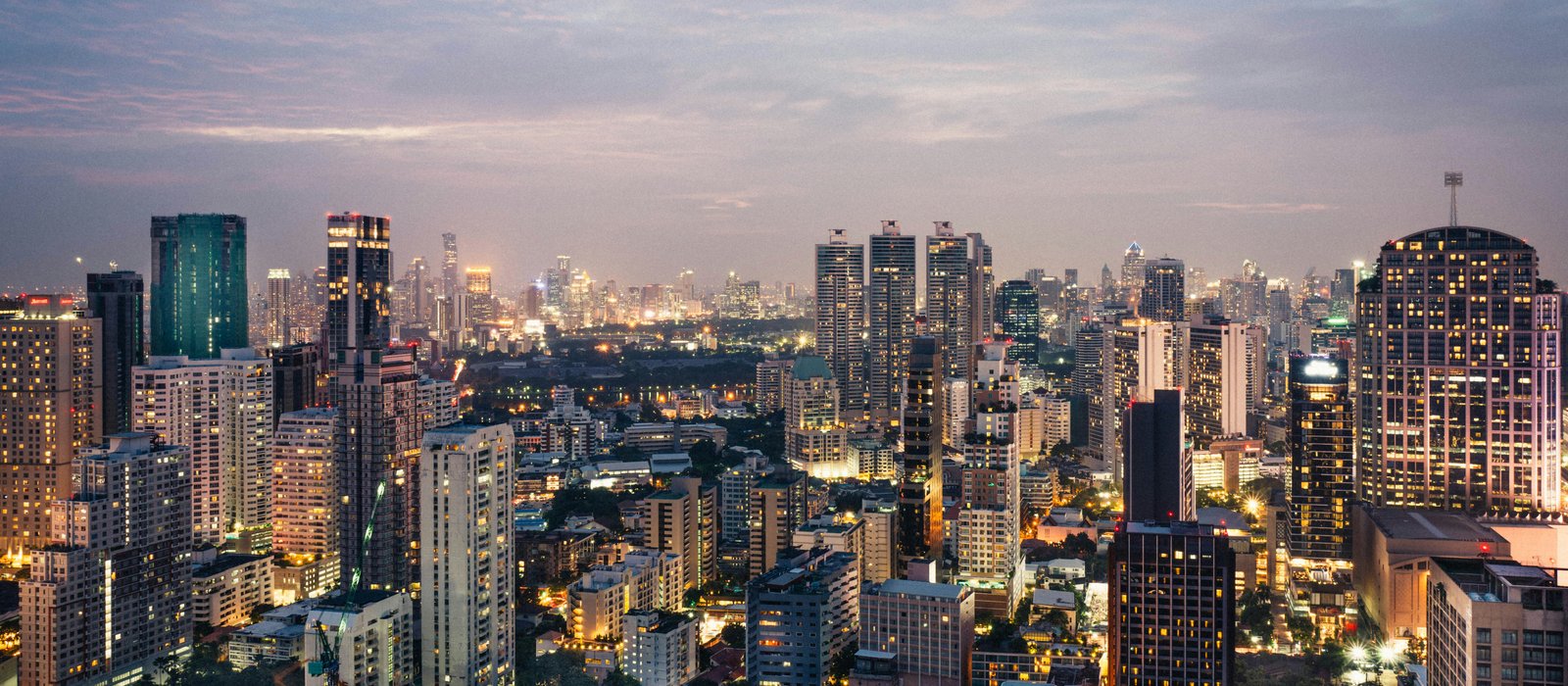
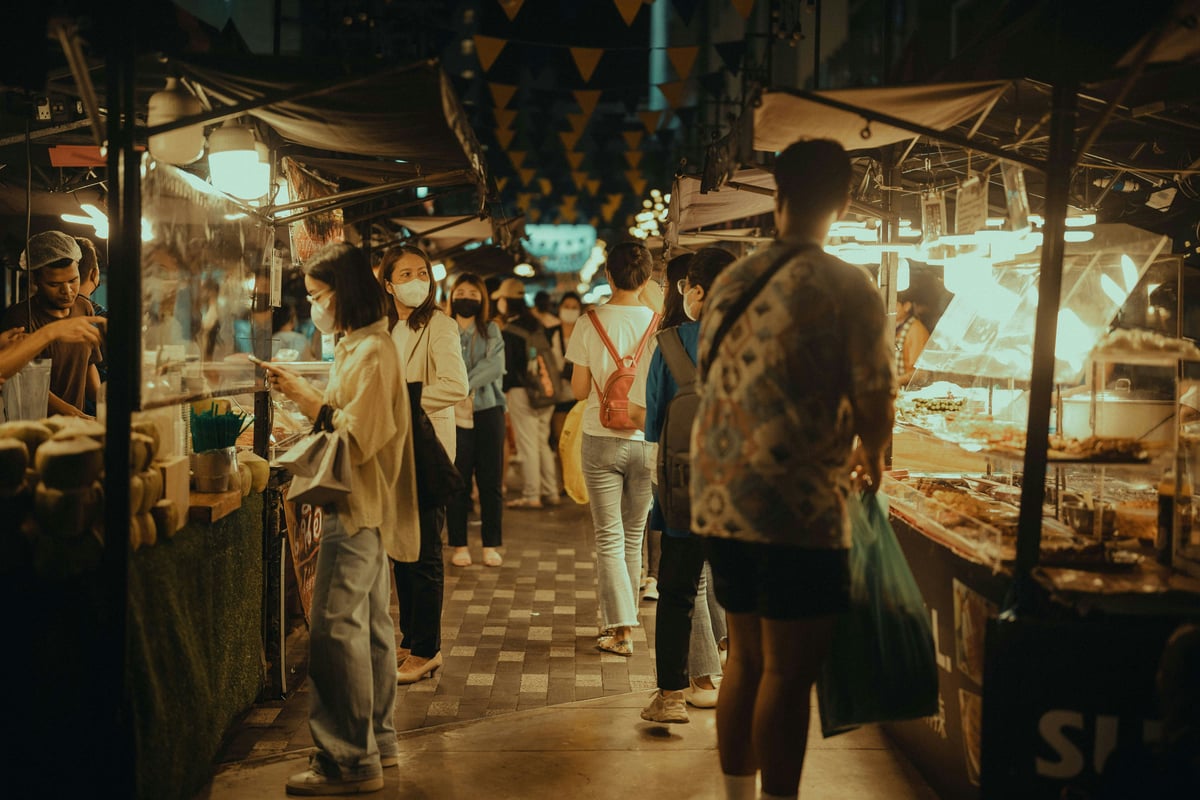
Bangkok is enormous, and where you sleep shapes your whole trip — a great area puts you minutes from the Skytrain and a night market; a bad one traps you in the city's legendary traffic. The good news: you really only need to choose between four neighborhoods, and each suits a clear kind of traveler. Here's how to pick, plus what to expect from each.
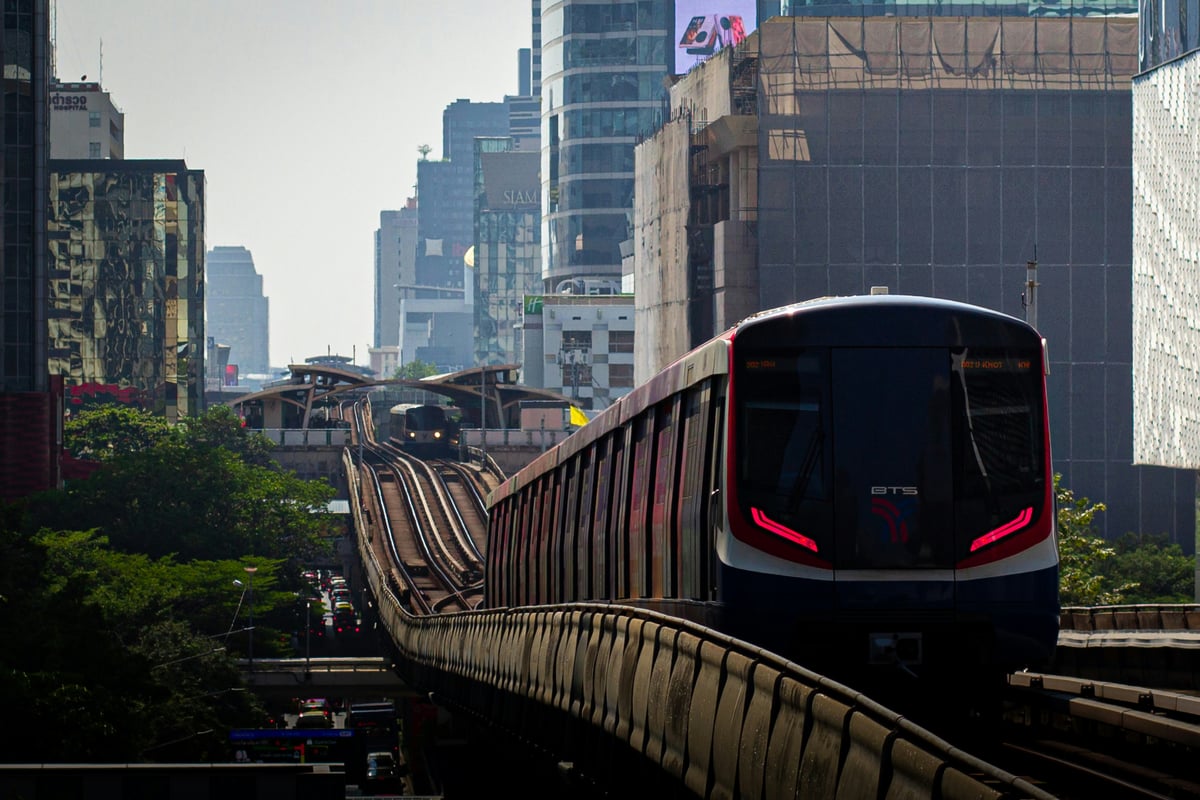
One rule that overrides everything else: stay near the BTS Skytrain or MRT metro. Bangkok's surface traffic is brutal, and the elevated/underground trains are clean, cheap, air-conditioned, and skip all of it. An otherwise lovely hotel that's a sweaty 20-minute walk from a station will quietly cost you hours over a few days.
Sukhumvit — best for first-timers
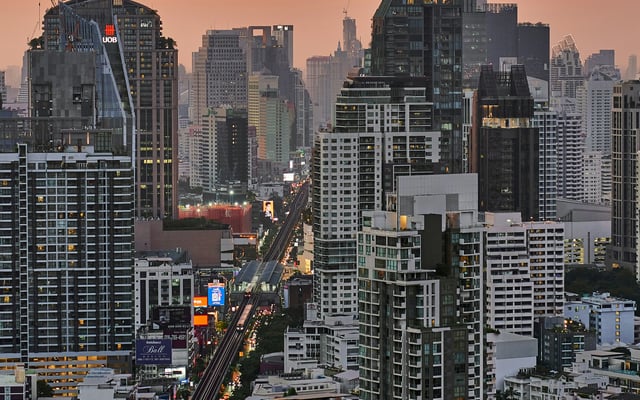
If it's your first trip and you want the path of least resistance, base in Sukhumvit, around the Asok or Thonglor BTS stations. This is the modern heart of Bangkok: it runs along the Skytrain, so the whole city is easy to reach, and it's packed with restaurants, rooftop bars, malls, and nightlife. It's where the largest concentration of international hotels sits, at every price point.
Asok is the practical, transit-hub end (it's where the BTS and MRT cross). Thonglor is more upscale and design-forward, full of cocktail bars and cafés popular with locals and expats. Either way, you trade a little "old Thailand" atmosphere for genuine convenience — a fair deal on a first visit.
Riverside / Old Town — best for sightseeing and atmosphere
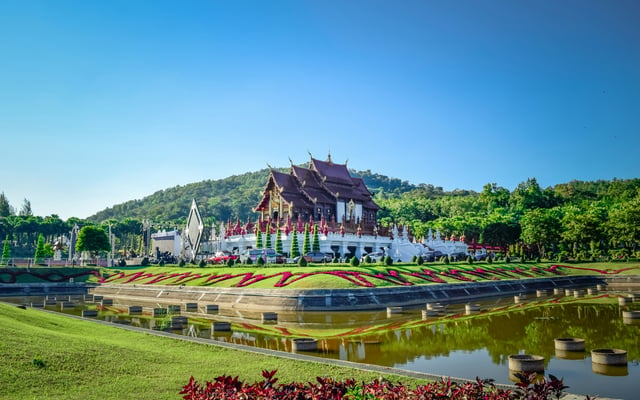
The Riverside and Old Town (Rattanakosin) area is the Bangkok of postcards: it's where the Grand Palace, Wat Pho, Wat Arun, and the Chao Phraya River are. Staying here means you can walk or take a quick river ferry to the headline sights, and the riverfront luxury hotels are some of the most famous in Asia.
The trade-off is transit: this historic district is less well connected to the Skytrain than Sukhumvit, so you'll lean more on river boats, taxis, and Grab to reach the modern parts of town. For travelers who came mainly for temples, river views, and atmosphere — and don't mind a slower commute to the malls — it's worth it.
Silom / Sathorn — best for business and rooftop bars
Silom and Sathorn are Bangkok's business district by day and a serious dining-and-rooftop scene by night. The area sits on both the BTS and MRT, making it as well-connected as Sukhumvit, and it's home to some of the city's best-known sky bars. It's also the gateway to Patpong's night markets. Choose it if you want excellent transit and rooftop views without the wall-to-wall tourist density of central Sukhumvit.
Khao San / Banglamphu — best for budget and backpackers
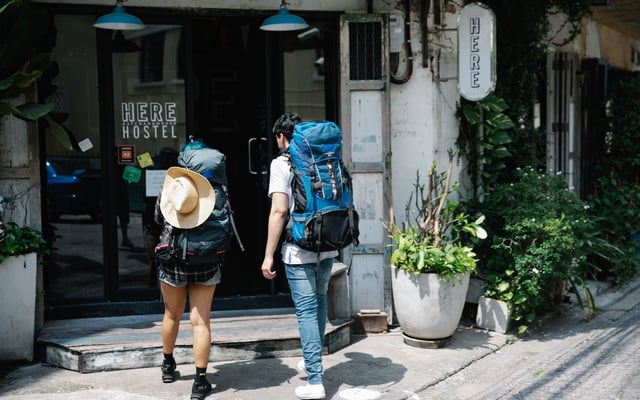
The Khao San Road area in Banglamphu is the legendary backpacker hub: cheap guesthouses, hostels, street food, bars, and a young, party-leaning crowd. It's close to the Old Town temples, which is a real plus for sightseeing. The catch is that it's not on the Skytrain, so getting to the modern city means a taxi, Grab, or a river-boat connection. It's the right base if you're traveling cheap and want energy and proximity to the historic sights — and the wrong one if you want quiet or quick metro access.
Getting from the airport to your hotel
Both airports are well outside the center. From Suvarnabhumi (BKK), the Airport Rail Link runs into the city and connects to the BTS, which is the cheapest way in if your hotel is near a station; otherwise a metered taxi or Grab is straightforward, just budget for traffic. From Don Mueang (DMK), the budget-airline airport, taxis and Grab are the simplest options. Either way, if you land late and exhausted, a pre-booked car or a Grab is worth the few extra dollars to skip the taxi queue.
A quick way to decide
If you want the single safest first-timer choice, book Sukhumvit near Asok and don't overthink it. Choose Riverside/Old Town if temples and river views matter more than nightlife and shopping. Pick Silom/Sathorn for rooftop bars plus great transit, and Khao San/Banglamphu if you're counting baht and want backpacker energy near the historic core.
Prices swing a lot by season — the cool, dry stretch from November to February is peak, so book those months well ahead and expect higher rates. Because hotel pricing and exchange rates move constantly, compare current rates rather than relying on any fixed figure; a quick converter helps you sanity-check what you're seeing:
100 USD ≈ … THB (enable JavaScript for today's rate)
FAQ
What's the best area in Bangkok for first-time visitors?
Sukhumvit, around the Asok BTS station. It's on the Skytrain, central, and full of restaurants and hotels at every price — the easiest, lowest-stress base for a first trip.
Where should I stay to be near the Grand Palace and temples?
The Riverside / Old Town (Rattanakosin) area. You can walk or take a short river ferry to the Grand Palace, Wat Pho, and Wat Arun, though it's less connected to the metro.
Is it important to stay near the BTS or MRT?
Very. Bangkok's road traffic is severe, and the Skytrain and metro let you skip it entirely. Staying within a short walk of a station is the single best location decision you can make.
Where's the cheapest place to stay in Bangkok?
The Khao San / Banglamphu backpacker area has the most budget guesthouses and hostels. It's close to the Old Town temples but not on the Skytrain, so factor in taxi or Grab rides to the modern city.
Bangkok’s main areas to stay
Where each neighborhood sits — distances in Bangkok matter.