Thailand runs on cash more than most first-time visitors expect, and every ATM withdrawal on a foreign card carries a flat fee that does not shrink when you take out less. That single detail — flat, not percentage — quietly decides how much a two-week trip costs you in fees. It also now depends on which card you put in the machine, which is the part almost nobody checks.
The fee is no longer one number
For years the answer was simple: Thai ATMs charged a flat ฿220 to foreign cards, at every bank, on every withdrawal. That figure is still quoted in most guides, and it is no longer reliably what you will see on the screen.
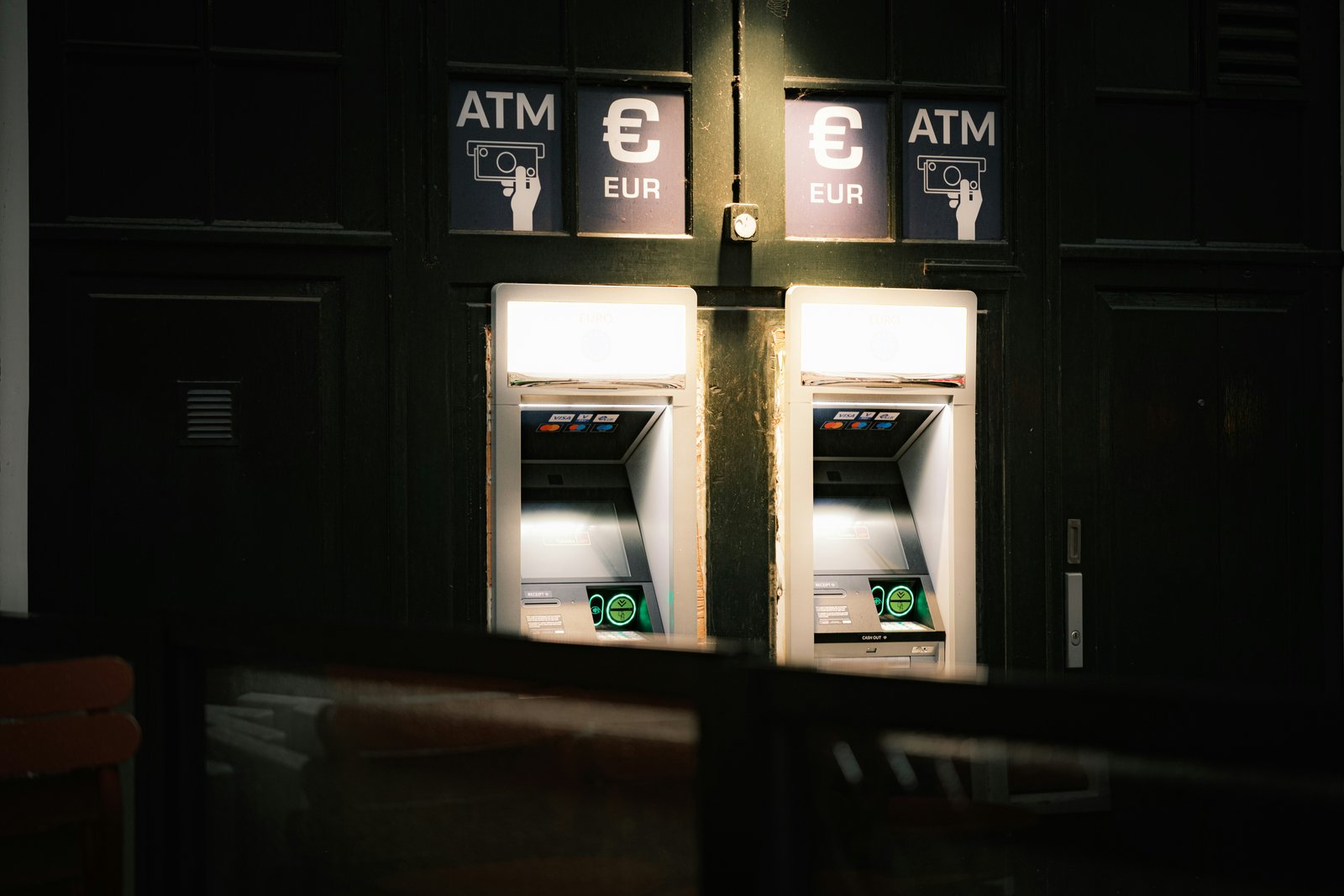
Thai banks have moved to fees that vary by card network. Visa withdrawals commonly show around 250 baht, while Mastercard withdrawals can show up to 350 baht at the same machine. Some banks still charge 220, and AEON — whose ATMs sit inside Big C and Lotus's supermarkets — is noticeably cheaper at roughly 150.
The practical consequence is easy to miss: if you are carrying both a Visa and a Mastercard, which one you reach for can change the cost of every single withdrawal for the whole trip. Nothing about the machine tells you this in advance. The fee is displayed on screen before you confirm, so the habit worth building is simply reading that screen rather than clicking through it.
Why flat fees change the maths
Because the largest charge is flat, it is the number of withdrawals that costs you, not the amount. Taking out 2,000 baht and taking out 20,000 baht incur exactly the same fee. Someone withdrawing small amounts as they go can easily pay several times what someone withdrawing in larger blocks pays, for exactly the same cash in hand.
The other three charges
The bank's flat fee is the one travelers notice. It is rarely the only one.
Your home bank's foreign transaction fee
Most US cards add their own charge, typically somewhere between nothing and 3% depending on the account. Unlike the Thai fee, this one scales with the amount — so it pushes gently in the opposite direction from the flat fee, though rarely enough to outweigh it.
The network's exchange margin
Visa and Mastercard apply their own spread when converting. It is built into the rate rather than itemised, which is why it tends to go unnoticed even by people who watch fees carefully.
Dynamic currency conversion — the avoidable one
At some point the machine will ask whether you want to be charged in US dollars or in Thai baht. Accepting dollars hands the conversion to the ATM operator, at a rate typically 3-7% worse than the interbank rate your card network would have used. On a large withdrawal that single tap costs more than the flat fee did.
The rule has no exceptions: always choose baht. Decline the conversion offer and let your own card network handle it. The screen is designed to make accepting look like the safe, familiar option — it is the expensive one.
What the cadence actually costs
Put the flat fee against a realistic trip and the spread is larger than most people assume. Take a traveler who needs 60,000 baht in cash across two weeks, at a bank charging the Visa rate:
Withdrawal pattern
Withdrawals
Flat fees paid
3,000 baht as needed
20
5,000 baht
6,000 baht at a time
10
2,500 baht
20,000 baht at a time
3
750 baht
Same cash, same trip, same bank — and the careless pattern costs over 4,000 baht more than the deliberate one, before any percentage charges are added. Put a Mastercard in the machine instead of a Visa and every row gets worse again.
The ceiling that caps it
You cannot simply withdraw everything at once. Thai ATMs cap a single transaction at roughly 20,000 to 30,000 baht depending on the bank, so there is a floor under how few withdrawals a trip can involve. That ceiling is what turns "take out more, less often" from vague advice into something with an actual optimum.
There is a counterweight, and it is a real one. Cash you are carrying is cash that can be lost or stolen, and a hotel safe is not always available or trustworthy. The fee arithmetic pushes toward large infrequent withdrawals; sense pushes back. Most travelers land somewhere in the middle rather than at either extreme, and that is the right place to be — the point is to arrive there deliberately rather than by drifting into twenty small withdrawals without noticing.
Ways to pay less
Accounts that refund the fee entirely
A few US accounts reimburse foreign ATM fees, which removes this whole calculation. Charles Schwab's checking account and Fidelity's cash management account are the two most commonly used by American travelers for exactly this reason. If you already hold one, the flat fee stops mattering and you can withdraw as often as you like. If you do not, it is worth knowing they exist before the next trip rather than after this one.
Use the cheaper network, and the cheaper machine
Where you have a choice, Visa currently costs less than Mastercard at most Thai banks, and AEON's machines undercut the major banks by a wide margin. Neither is a dramatic saving on any single withdrawal; across a trip they compound.
How much cash you actually need
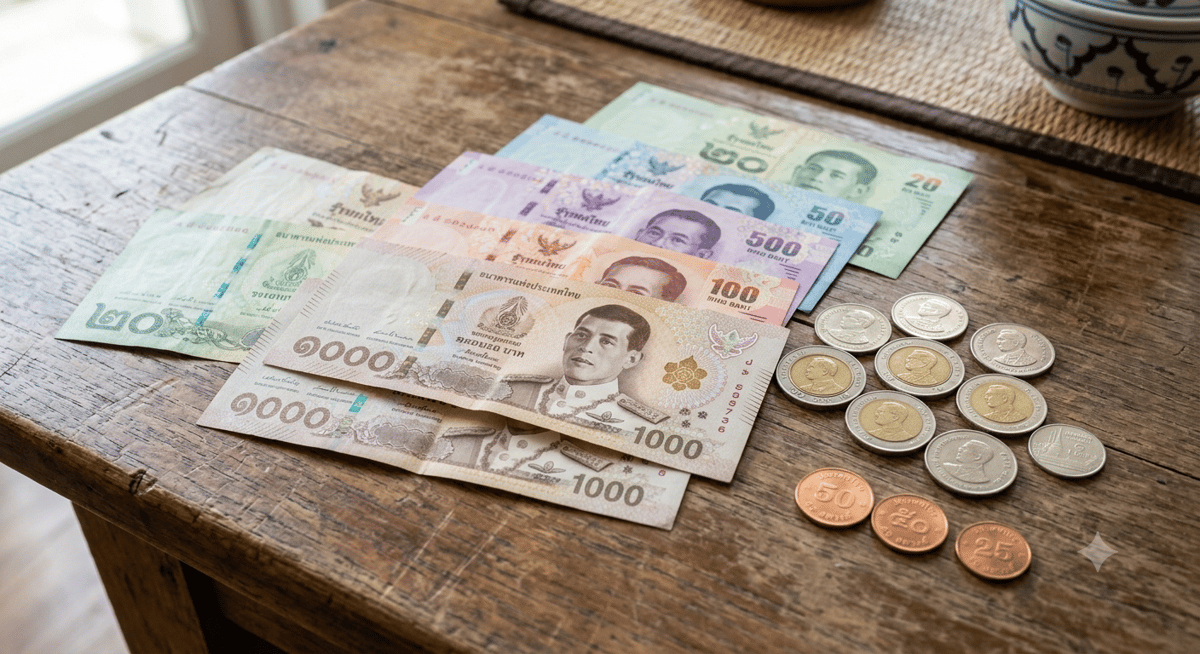
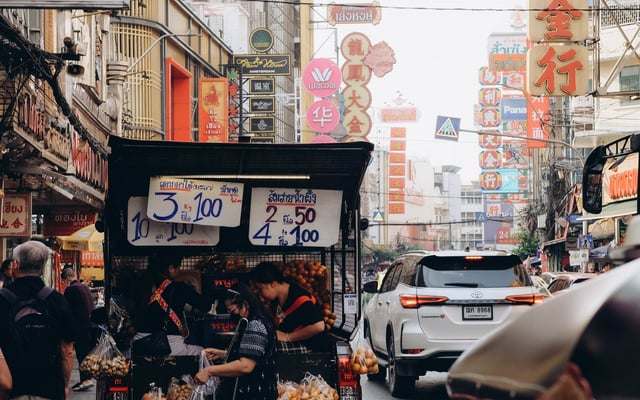
Your cash floor is set by where you spend, not by your budget. Street food, markets, tuk-tuks, songthaews, small vendors and most rural businesses are cash-only in practice. Hotels, malls, chain restaurants and upscale places take cards comfortably. A trip weighted toward the first list needs materially more cash on hand than one weighted toward the second — and that, rather than the fee itself, is what should drive how often you visit a machine.
Bringing dollars instead
Exchanging USD cash at a dedicated booth can beat repeated ATM withdrawals for larger sums, once the flat fee is counted. Airport counters are consistently worse than city booths, so the airport is the place to change the minimum you need to get into town rather than your trip's cash. Rates move daily, so check a live figure rather than planning against a fixed one:
100 USD ≈ … THB (enable JavaScript for today's rate)
Where this fits in the trip
The fee arithmetic is simple once you can see it. What makes it awkward in practice is that withdrawal cadence is not really a money decision — it is a routing decision. How much cash you need at once depends on which islands you are on and whether they have bank ATMs, how many days you are away from a city, and whether the next leg is somewhere cards work at all. People end up making twenty small withdrawals not because they miscounted the fee, but because their itinerary never let them plan further ahead than the next two days.
How the cash plan falls out of the route — rather than being bolted on afterwards — is worked through in the complete Thailand trip guide.
FAQ
How much do Thai ATMs charge foreign cards?
A flat per-withdrawal fee that now varies by card network — commonly around 250 baht on Visa and up to 350 baht on Mastercard, with some banks still at 220 and AEON machines lower at roughly 150. The fee is displayed on screen before you confirm, so check it rather than assuming the old 220 figure.
Should I withdraw large amounts less often?
Mostly yes, because the fee is flat rather than a percentage — twenty small withdrawals can cost several thousand baht more than a handful of large ones. But transactions are capped at roughly 20,000-30,000 baht, and carrying a lot of cash has its own risk, so the sensible answer is fewer, larger withdrawals rather than the largest possible.
Should I choose baht or dollars at the ATM?
Always baht. Accepting the machine's offer to charge you in dollars hands the conversion to the ATM operator at a rate typically 3-7% worse than your card network's. Decline it every time.
Is it cheaper to bring US dollars and exchange them?
For larger sums it can be, once the flat ATM fee is counted, and dedicated city exchange booths give better rates than airport counters. For smaller amounts the convenience of an ATM usually wins.
Can I use cards everywhere in Thailand?
No. Hotels, malls, chain and upscale restaurants take cards, but street food, markets, tuk-tuks, songthaews, small vendors and most rural businesses are cash-only in practice.