Thailand's weather is more nuanced than "hot and tropical." The country has three broad seasons, the two coasts run on different schedules, and the north has its own quirks. Understanding the pattern month by month helps you time your trip — and pick the right region for your dates. Here's a guide to Thailand's weather through the year, designed to help you pick both the right time and the right region for the trip you have in mind.
The three seasons
For most of Thailand, the year divides into: cool and dry (roughly November–February), the peak and most pleasant season; hot (roughly March–May), building toward the rains with intense heat; and rainy/monsoon (roughly June–October), with downpours often short and heavy rather than constant. But remember the crucial caveat: the two coasts have different rainy seasons, so there's almost always somewhere with good beach weather.
November to February: cool and dry (peak season)
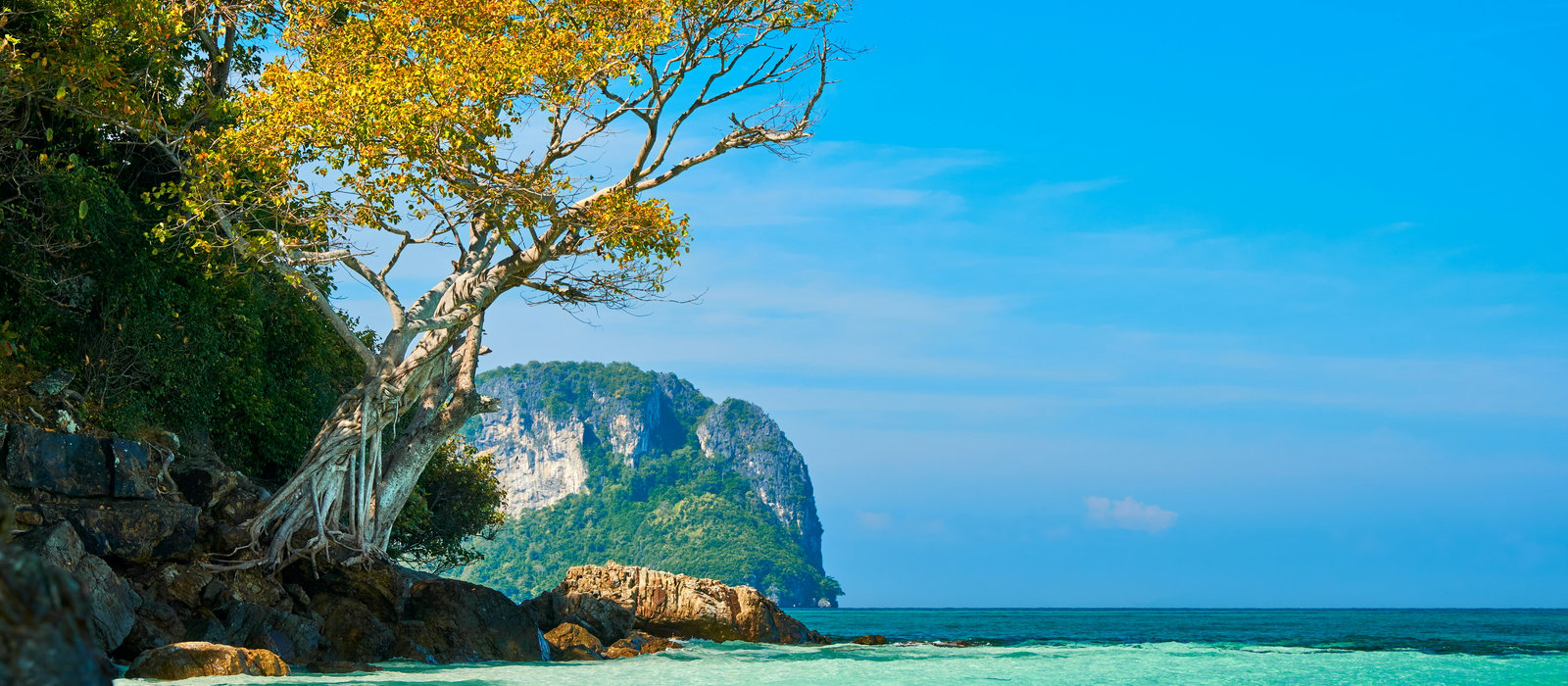
The best overall weather — pleasant temperatures, low humidity, sunshine, and little rain across most of the country. This is peak tourist season, especially December and January, so expect higher prices and crowds. It's prime time for the Andaman beaches (Phuket, Krabi) and ideal for the north (though evenings get chilly). The clear standout for reliable weather nationwide.
March to May: hot season
The hottest months, when temperatures and humidity climb and inland areas (including Bangkok) can be genuinely punishing in the afternoons. The north suffers a burning season (roughly March–April) with poor air quality from agricultural fires. The upside: it's still good for many beaches early on, the seas are calm, and Songkran (mid-April) brings the joyous water-fight new year. Plan for the heat — outdoor activities in the morning, shade and air-con midday.
June to October: rainy season
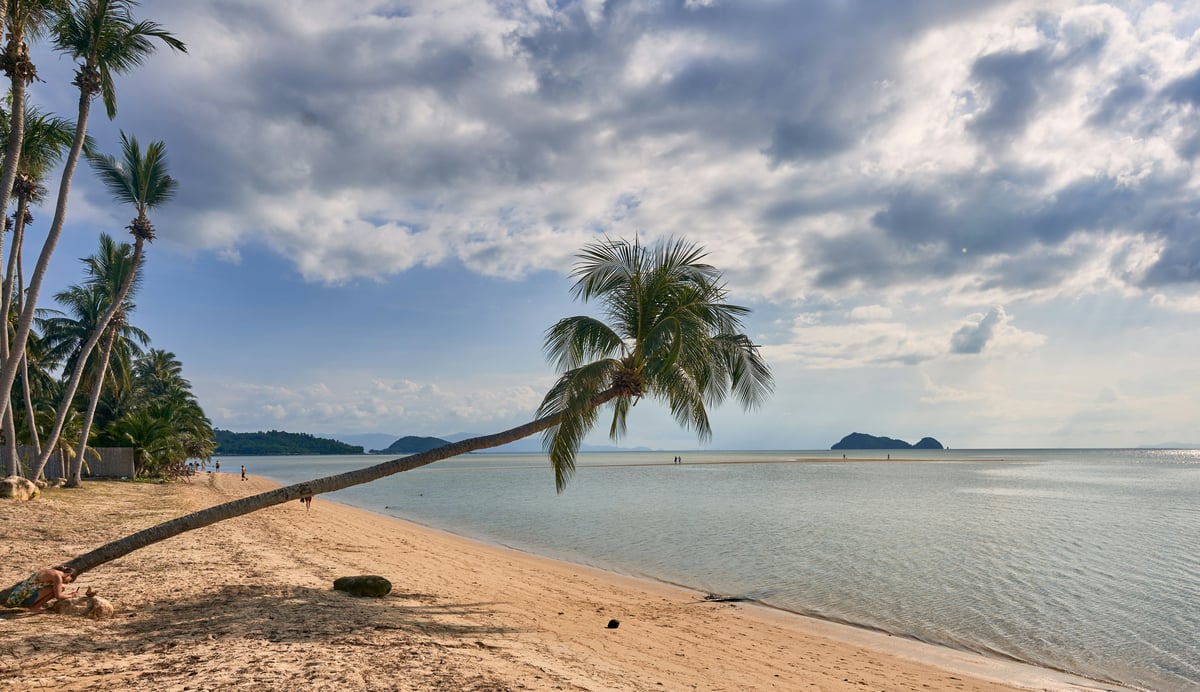
The southwest monsoon brings the wet season to much of the country. Rain typically comes in intense bursts (often afternoon) rather than all day, leaving dry hours around them, and the landscapes turn lush and green. It's low season, so prices drop and crowds thin. The Andaman coast is at its wettest (worst around September–October), so beach-goers should favor the Gulf coast (Koh Samui, Phangan, Tao), which is often drier mid-year. A rainy-season trip is far from a washout for flexible travelers.
The two coasts, side by side
This is the key for beach trips. The Andaman coast (Phuket, Krabi, Phi Phi) is best November–April, wettest around September–October. The Gulf coast (Koh Samui, Phangan, Tao) is often best mid-year, with its wettest spell around October–December — roughly opposite to the Andaman side. So whenever you travel, point yourself at the coast that's in its dry season for the best beach weather.
How weather affects what you can do
Weather shapes more than your comfort — it affects which activities are possible. Boat trips and island-hopping can be cancelled in rough monsoon seas, so the dry season on each coast is essential if these are priorities. Diving visibility is best in the dry months, and some dive sites (like the Similans) close in monsoon. Trekking and outdoor activities in the north are most comfortable in the cool season and hampered by burning-season air quality. Even temple-hopping and city sightseeing are far more pleasant outside the punishing March–May heat. So when you visit determines not just the weather you'll feel, but the experiences realistically open to you — another reason to match your season to your trip's priorities.
Quick month-by-month summary
Nov–Feb: best weather nationwide, peak season, prime for Andaman beaches and the north. Mar–May: hot, northern burning season, Songkran in April, calm seas. Jun–Sep: rainy (Andaman wettest), lush, cheap, Gulf coast better. Oct: transitional, Gulf coast entering its wet spell, Andaman improving. Match your destinations to the month and you'll get the best of Thailand's weather. For budgeting around seasonal price swings, a live converter helps:
100 USD ≈ … THB (enable JavaScript for today's rate)
FAQ
What are the seasons in Thailand?
Three: cool and dry (roughly November–February, the best and peak season), hot (March–May), and rainy/monsoon (June–October). The two coasts have different rainy seasons, so there's usually good beach weather somewhere.
What's the rainiest month in Thailand?
It depends on the coast — the Andaman side (Phuket, Krabi) is wettest around September–October, while the Gulf coast (Koh Samui) is wettest around October–December. Inland and the north peak mid-monsoon.
Can I visit Thailand in the rainy season?
Yes — rain often comes in short, heavy bursts rather than all day, the scenery is lush, and prices and crowds drop. Just favor whichever coast is drier for your dates (often the Gulf mid-year).
When is it too hot in Thailand?
March to May is the hot season, when inland areas like Bangkok can be punishing in the afternoons, and the north has poor air quality from the burning season (March–April). Plan outdoor activities for mornings.