Staying connected in Thailand is cheap, fast, and easy — the only real decision is how you get data: a physical SIM card bought locally, or an eSIM you set up before you even leave home. For most American travelers in 2026, an eSIM is the simplest option, because it works the moment you land with nothing to swap or fumble. But local SIMs still win on raw value. Here's how to choose and what to expect.
eSIM vs. physical SIM: which is right for you?
Get an eSIM if you want zero hassle
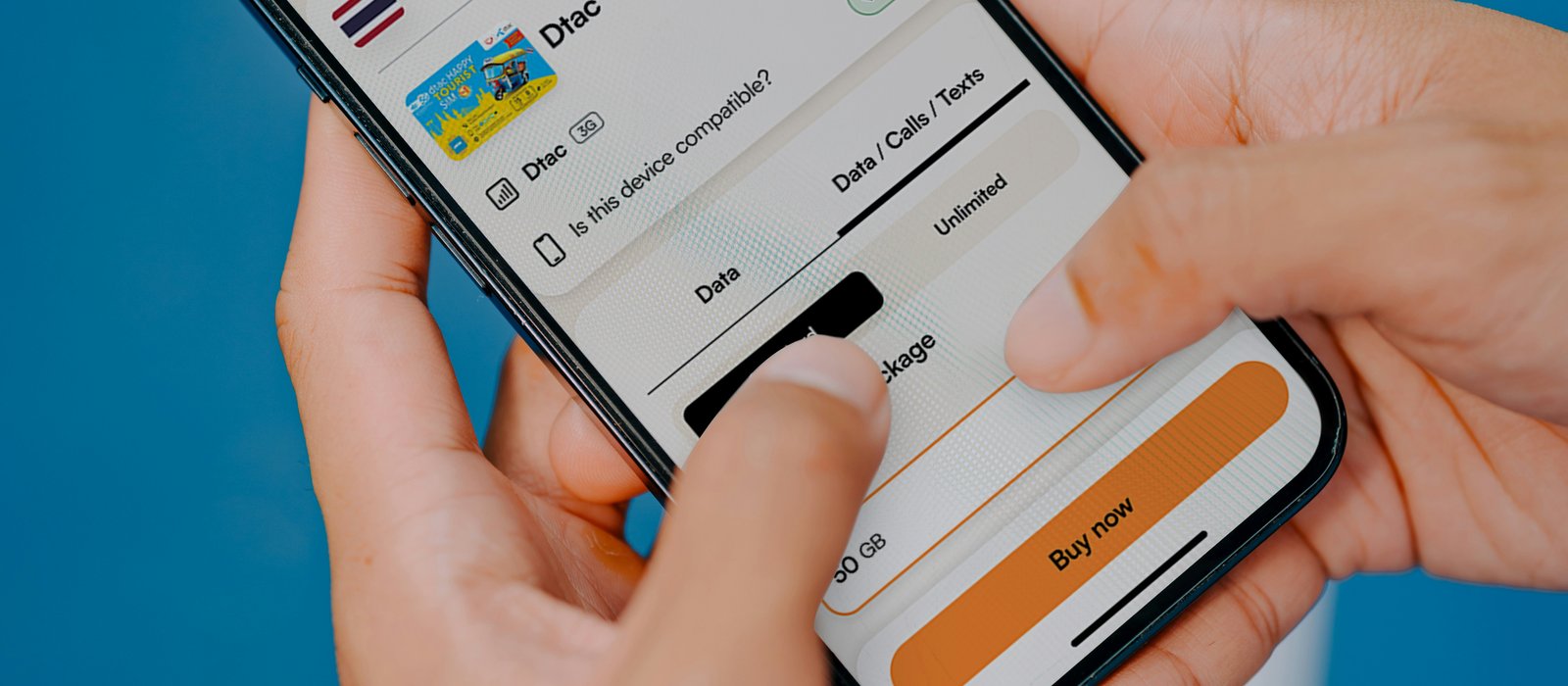
An eSIM is a digital SIM you install by scanning a QR code; there's no physical card. You buy a Thailand data plan from a provider like Airalo, Holafly, or Nomad before your trip, install it in a few minutes, and it activates when you connect to a Thai network on arrival. The upside is huge for a short trip: you skip the airport SIM counter entirely and have working data the instant you turn off airplane mode. The catch is that your phone must support eSIM (every recent iPhone and most flagship Android phones do) and be carrier-unlocked.
Get a local physical SIM if you want the best value
Thailand's three big networks — AIS, TrueMove H, and dtac — all sell inexpensive tourist SIM packages with generous data, sold right at the airport arrivals hall and at convenience stores in town. For longer stays or heavy data use, a local SIM typically gives you more gigabytes for your money than an eSIM, and you'll get a Thai phone number. The trade-offs: you have to physically swap your SIM (and not lose your home one), and you may queue at the airport counter.
What coverage is actually like
Thailand's mobile network is genuinely good. You'll get fast, reliable 4G and 5G across Bangkok, Chiang Mai, Phuket, and essentially all the major tourist areas. Coverage thins out only in the genuinely remote places — deep in national parks, on the smaller or more isolated islands, and in the far northern mountains. For the trip most people take, you'll have strong signal almost everywhere you go.
How much data should you buy?
For a typical week to ten days of maps, messaging, ride-hailing, and social media, a mid-size tourist data package is plenty; if you're working remotely, video-calling, or streaming, size up or choose an unlimited plan. Tourist packages are usually sold in tidy 8-, 15-, and 30-day blocks, so match the plan to your trip length rather than overbuying. Prices are low either way — data is one of the genuinely cheap things about Thailand, often a few dollars for a week's worth — but plan prices do shift, so check the current rate when you buy rather than trusting an old figure.
10 USD ≈ … THB (enable JavaScript for today's rate)
Apps worth downloading before you go
Whatever you choose for data, install a few things while you're still on home Wi-Fi: Grab (ride-hailing and food delivery — the single most useful app in Thailand), Google Maps with offline maps downloaded for your cities, your airline and hotel apps, and a translation app. If you're filing the required Thailand Digital Arrival Card (TDAC), do that online before you fly as well — it's free on the official portal, and you don't want to be hunting for it on airport Wi-Fi.
The bottom line
For most first-time visitors on a one-to-two-week trip, buy an eSIM before you leave for the convenience of landing with instant data — set it up the night before your flight and forget about it. If you're staying longer, using a lot of data, or want the absolute lowest cost, grab a local tourist SIM from AIS, TrueMove, or dtac at the airport. Either way you'll be connected within minutes of arriving, for very little money.
FAQ
Is an eSIM or a physical SIM better for Thailand?
An eSIM is more convenient — it works the moment you land with no counter visit. A local physical SIM from AIS, TrueMove, or dtac usually gives more data for the money, better for longer or heavier-use trips.
Will my phone work in Thailand?
Yes, as long as it's unlocked. For an eSIM, your phone also needs eSIM support (recent iPhones and most flagship Android phones have it). Otherwise, a local SIM works in any unlocked phone.
Is the cell coverage good?
Very. Fast 4G/5G covers Bangkok, Chiang Mai, Phuket, and the major tourist areas. Signal only weakens in remote national parks, isolated islands, and the far-northern mountains.
Where do I buy a SIM at the airport?
The arrivals halls at Bangkok, Phuket, and Chiang Mai airports have booths for AIS, TrueMove, and dtac selling tourist data packages. Convenience stores in town sell them too.
Keep planning
Not sure how it all fits together?
Pick your trip length and we'll route a real day-by-day plan.