Most Americans who bring prescription medication into Thailand walk through customs with their pills and never speak to anyone about them. A smaller group carries a drug Thailand regulates far more tightly than the United States does, and for that group the paperwork has to be finished before the flight, not at the airport. The whole question comes down to one thing: which list your drug sits on.
Do you need a permit to bring prescription medication into Thailand?
Bringing prescription medication into Thailand needs no permit for ordinary drugs: blood-pressure tablets, statins, antibiotics, insulin, inhalers, birth control and most antidepressants travel in your bag with only the pharmacy label. A permit or a doctor's certificate matters only when the drug is a controlled substance under Thai law, meaning a narcotic or a psychotropic. Thailand's Food and Drug Administration (Thai FDA) decides which drugs those are, and its lists differ from the American schedules.
So the first job is not packing. It is finding the active ingredient of each thing you take, the generic name printed in small type under the brand, and checking it against the Thai FDA's controlled-substance lists. A brand name means nothing at a Thai counter; the ingredient is what the law reads.
Which drugs does Thailand treat as controlled?
Thailand treats as controlled the drugs the Thai FDA places in its narcotic or psychotropic categories, and the ones Americans most often carry are strong painkillers (oxycodone, hydrocodone, codeine, tramadol, morphine), benzodiazepines (alprazolam, diazepam, clonazepam, lorazepam), sleep medicines such as zolpidem, and ADHD stimulants. Thailand regulates each category separately, so a drug that is routine at home can need a certificate, an advance permit, or be refused entry altogether.
ADHD stimulants are the case that catches people. Amphetamine-based medicines such as Adderall sit among the drugs Thailand treats most strictly, and many travelers report that they cannot be brought in at all, prescription or not. Methylphenidate (Ritalin, Concerta) has been handled differently. Because this is exactly where a mistake is most expensive, check the current Thai FDA position for your specific ingredient, and if you take a stimulant, ask your prescriber about a substitute for the trip well before you book.
Medical cannabis is its own trap. Thailand's cannabis rules have changed repeatedly, and an American medical-marijuana card carries no weight at Thai customs. Do not pack cannabis products, including CBD with any THC, on the strength of a state prescription.
How much medication can you carry into Thailand?
The amount of medication you can carry into Thailand is capped only for controlled drugs: the Thai FDA allows a traveler a limited personal supply of a narcotic or psychotropic medicine, measured in days of treatment, provided a doctor's certificate covers it. Carrying more than that limit requires a permit applied for in advance. Ordinary prescriptions carry no fixed day cap, though customs expects a quantity that matches a personal course for the length of your stay.
The exact day limit and the permit lead time are set by the Thai FDA and are not something to rely on from a forum thread, ours included; read them on the Thai FDA's travelers' page or ask the Royal Thai Embassy in Washington before you fly. What matters for planning is the comparison. Set the number of days of controlled medication you need against the length of your trip. Americans enter visa-free for 30 days, and many trips are much shorter, so a two-week vacation is usually inside any personal-supply allowance. A long stay, an extension, or a stop in Thailand on a longer Asia loop is where people cross the line without noticing.
What paperwork should you carry for prescription medication in Thailand?
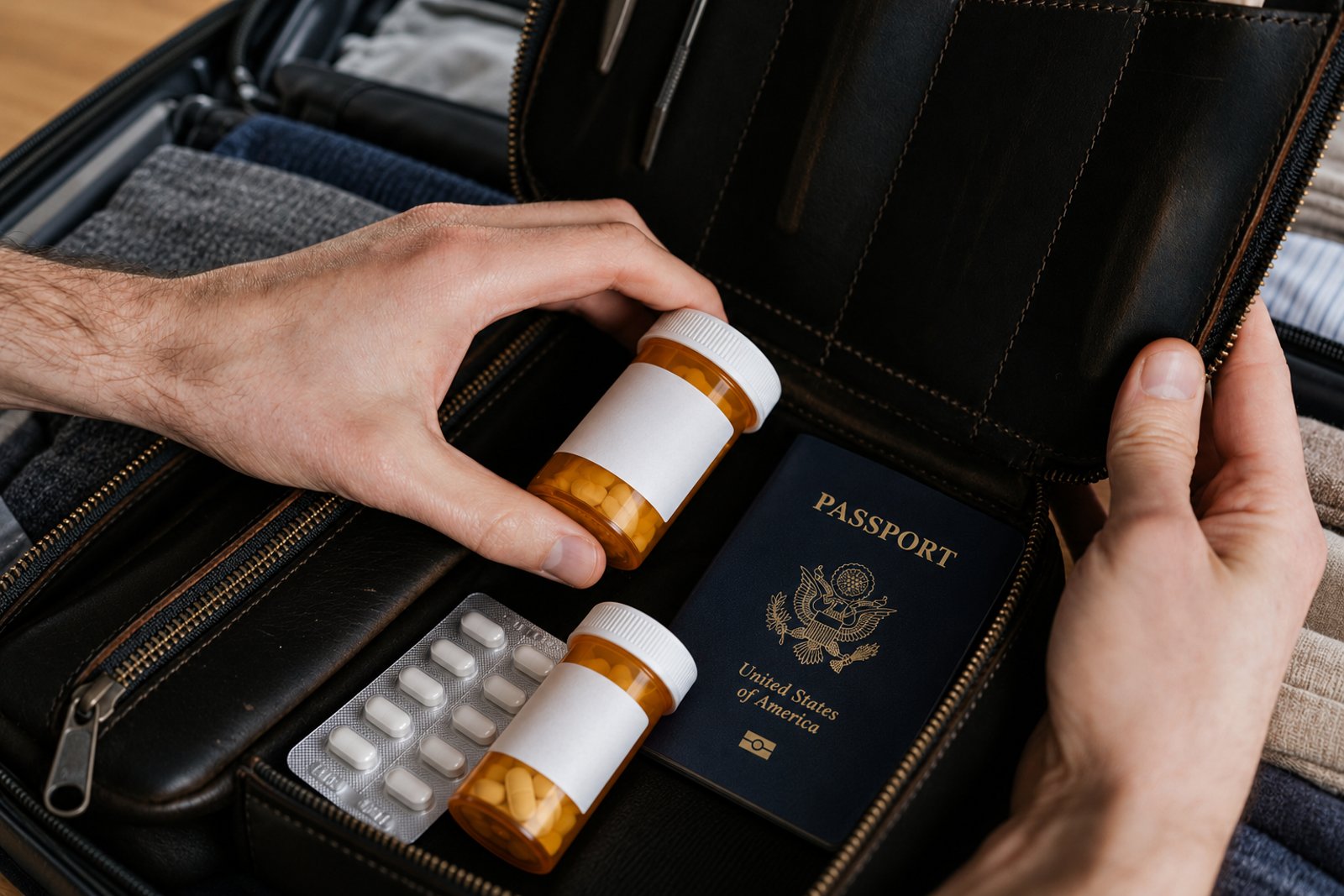
The paperwork for prescription medication in Thailand is simple for ordinary drugs and specific for controlled ones. For ordinary drugs, keep each medicine in its original pharmacy bottle with your name on the label. For a narcotic or psychotropic, carry a letter from your doctor, in English, giving your name, diagnosis, the drug's generic name, the dose, how often you take it, and the total quantity you are carrying.
A practical packing routine that holds up at any Thai airport:
Original containers only. Pill organizers are fine for daily use once you arrive, not for the flight.
Your name on every label must match the name in your passport.
The doctor's letter, plus a photo of it on your phone, in the same bag as the drug.
Medication in your carry-on, never only in checked luggage, so a lost suitcase does not leave you without it.
A printed copy of any Thai FDA permit, if your drug and quantity required one.
Thailand's online arrival card, the TDAC, is free and is a separate formality from medication. Filling it in does not declare or clear anything you are carrying.
What happens at Thai customs if your medication is not allowed?
Thai customs treats medication that is not allowed, or controlled medication carried without the right documents, as a drug-law matter rather than a paperwork slip. The medicine can be confiscated, and Thailand's narcotics laws carry serious penalties even for small quantities. Most travelers with ordinary prescriptions never see an officer, but the risk sits entirely with controlled drugs, which is why the checking belongs before departure.
If you are unsure about a drug after checking the Thai FDA lists, contact the Royal Thai Embassy or a Thai consulate in the United States and ask in writing. A written answer from an official source is worth more than any amount of reassurance online, and it is the thing to show if a question comes up on arrival.
Can you buy or refill prescription medication in Thailand?
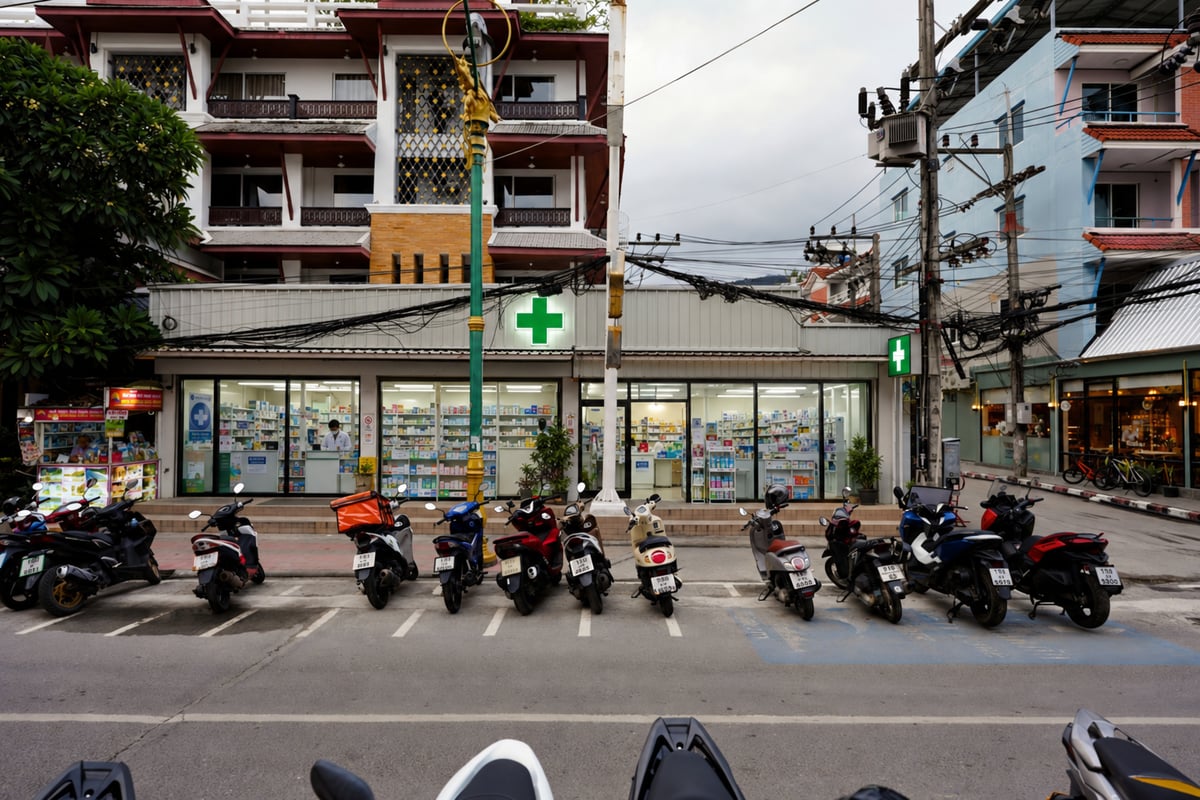
Buying prescription medication in Thailand is easy for ordinary drugs: Thai pharmacies, including the chain branches in Bangkok malls and tourist towns, sell many medicines over the counter that need a prescription at home, and pharmacists often speak some English. Controlled drugs are different; a Thai pharmacy will not sell them without a Thai doctor's prescription, and hospitals dispense them to their own patients.
That makes a local refill a reasonable backup for something like an antibiotic or allergy tablet, and a poor plan for the medicine that actually needs the paperwork. Bring enough of any controlled drug for the whole trip, within the Thai allowance, rather than counting on finding it locally. If you do need a refill of an ordinary medicine, take the empty box or the label: Thai pharmacists work from the generic name, and the same drug often sells under a different brand.
A checklist for bringing prescription medication into Thailand
Bringing prescription medication into Thailand without trouble takes five steps, in this order, starting at least a month before the flight so a permit has time to arrive if one is needed. Most travelers will stop after step two, because their medicines turn out to be ordinary; the remaining steps exist for the smaller group carrying a narcotic, a psychotropic or a stimulant.
List every medicine by its generic name, including the ones you take only occasionally.
Check each name against the Thai FDA's narcotic and psychotropic lists.
For any controlled drug, count the days of supply you will carry and compare them with the Thai FDA's personal-supply limit.
If you are over the limit, or the drug needs an advance permit, apply to the Thai FDA, or ask your prescriber for an alternative.
Get the doctor's letter, pack everything in original containers in your carry-on, and keep the documents with the drugs.
Medication is one of the few entry questions that has to be settled weeks ahead, and it is worth fitting into the rest of your arrival planning, which the complete thailand trip guide lays out in order.
Frequently asked questions
Do I need to declare prescription medication at Thai customs?
Ordinary prescription medicine in personal quantities is normally carried through without declaration. For controlled drugs, carry the doctor's letter and any permit and be ready to show them; if you are unsure whether your quantity needs declaring, use the red channel and ask.
Do the rules cover over-the-counter medicine too?
They can. Thailand regulates some ingredients that American drugstores sell freely, pseudoephedrine in cold and allergy tablets being the usual example, so run your over-the-counter medicines through the same generic-name check as your prescriptions.
Do the same rules apply if I am only transiting Bangkok?
If you stay airside and do not pass Thai immigration, you do not enter Thailand's customs territory. If your connection makes you clear immigration, for example to recheck a bag, the entry rules apply to what you carry.
Keep planning
Not sure how it all fits together?
Pick your trip length and we'll route a real day-by-day plan.