The small Thai islands have clinics, not hospitals. Anything a clinic cannot handle means a transfer to Koh Samui, Phuket or Bangkok — and the mechanics of that transfer, who arranges it and what it costs, are almost never discussed before people travel. Here is how it works.
What is actually on each island
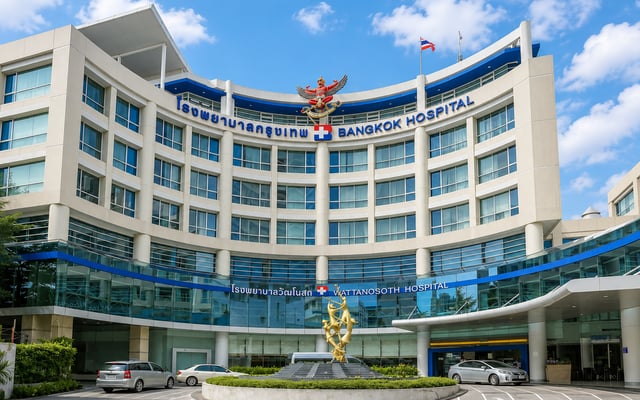
Koh Samui and Phuket have full private hospitals capable of handling serious cases without a transfer off the island.
Koh Phangan, Koh Tao, Koh Lanta and Koh Chang have clinics or basic facilities. They handle ordinary problems and stabilise serious ones. They do not treat them.
That difference is structural, not a matter of degree. On Samui a serious injury is treated where it happens. On Koh Tao it is stabilised and moved.
Hyperbaric chambers
Koh Tao has hyperbaric chamber facilities, which is worth stating explicitly because Koh Tao is one of the world's busiest dive-training destinations and decompression illness is the specific emergency the island generates most. Koh Phangan and Phuket also have chambers.
This is the one category where a small island has specialist capability that a larger one may not — the facilities follow the diving, not the population.
How far you are from a hospital that can treat you: Koh Phi Phi · Phuket · Koh Samui · Bangkok. (Enable JavaScript for the interactive map.)
How a transfer physically happens
Two routes exist, and which applies depends on the island and the case.
Boat and ambulance is the ordinary path. A patient goes by boat to the mainland or to a larger island, then by road ambulance to a hospital. This is what happens for cases that are serious but stable.
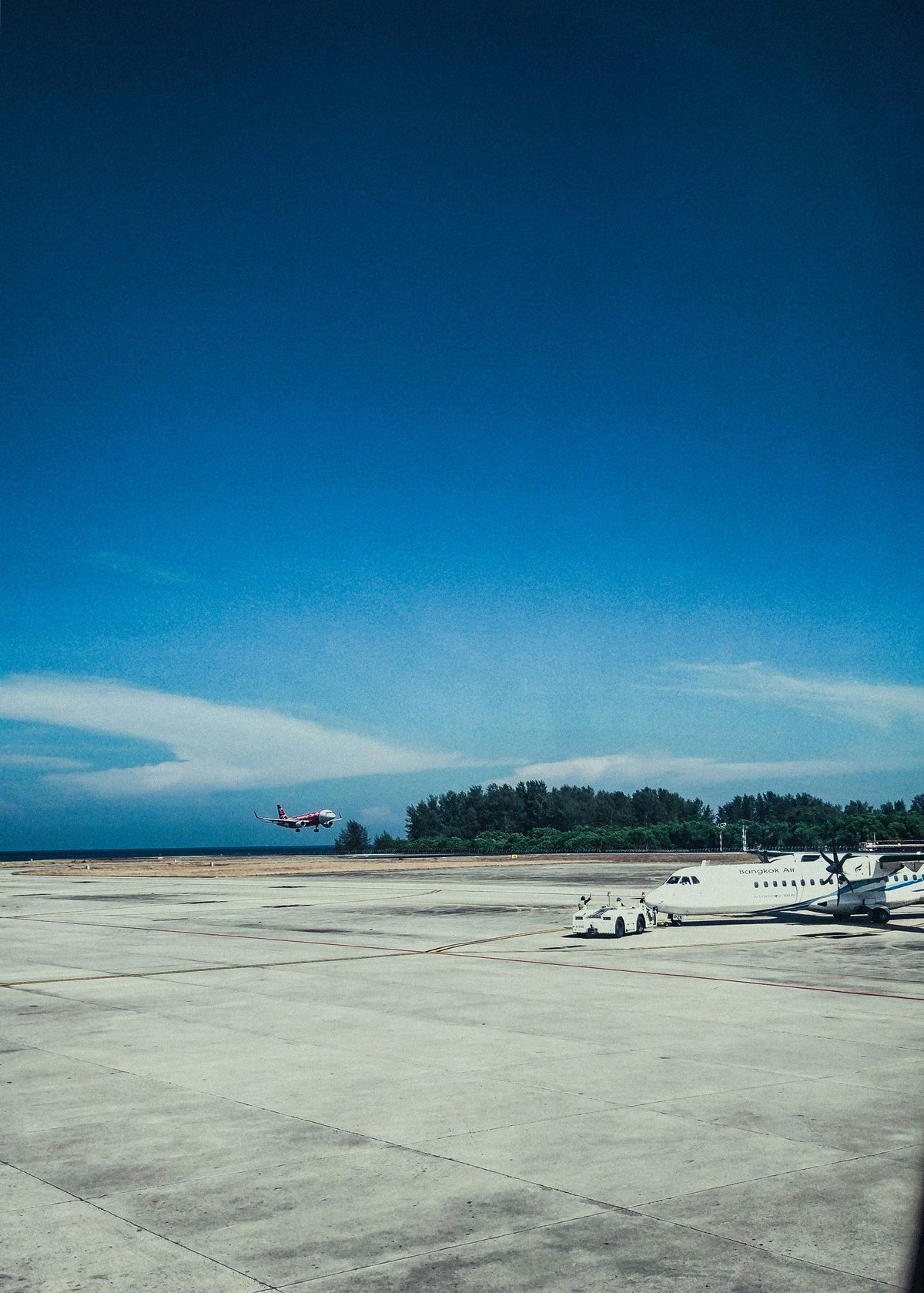
Air ambulance is used where the island has an airstrip and the case warrants it — Koh Samui, Phuket and Krabi have airports. Koh Tao, Koh Phangan, Koh Lanta and Koh Chang do not, so an air evacuation from those islands is not a direct option.
Read those two lists together and the geography does something specific: the islands with clinic-level care rather than hospitals are largely the same islands with no airstrip. The place where a transfer is most likely to be needed is the place where it is slowest to arrange.
Who arranges it
The insurer's assistance line coordinates a medical evacuation with local providers. Not the patient, not usually the treating clinic, and not a family member calling from home.
The practical consequence is that the number that matters in a serious emergency abroad is the one printed on the insurance policy — and it is worth having it somewhere other than an email inbox on a phone that may be in a bag on a boat.
What it costs
Medical evacuation from a Thai island runs into the tens of thousands of US dollars, with a dedicated air ambulance at the higher end and a commercial flight with a medical escort at the lower.
This is the line item travel insurance exists for. It is also the coverage most commonly assumed rather than checked — and, as our guide to what travel insurance actually covers sets out, evacuation and repatriation are separate benefits, so a policy may fund the move to Bangkok without funding the flight home.
US domestic health insurance generally provides little or no coverage abroad and almost never covers evacuation.
What is not documented
Transfer timing is the honest gap. How long an island-to-Bangkok medical transfer typically takes is not reliably published, and it would depend on the island, the hour, the sea state and whether an air ambulance is available. Anyone quoting a confident figure is estimating.
How this connects to the island choice
Every element above is fixed before departure. Which islands have hospitals and which have clinics, which have airstrips and which do not, which have hyperbaric chambers — all of it is knowable when the itinerary is being built, and none of it is knowable in the moment it becomes relevant.
How the medical geography sits alongside the other reasons people pick islands is worked through in the complete Thailand trip guide.
FAQ
Which Thai islands have hospitals?
Koh Samui and Phuket have full private hospitals. Koh Phangan, Koh Tao, Koh Lanta and Koh Chang have clinics or basic facilities that stabilise serious cases rather than treating them.
Is there a hyperbaric chamber on Koh Tao?
Yes — Koh Tao has hyperbaric chamber facilities, which reflects its status as a major dive-training destination. Koh Phangan and Phuket also have chambers.
How does a medical evacuation from a Thai island work?
Either by boat then road ambulance, or by air ambulance where the island has an airstrip. Koh Samui, Phuket and Krabi have airports; Koh Tao, Koh Phangan, Koh Lanta and Koh Chang do not.
Who arranges a medical evacuation?
The insurer's assistance line coordinates it with local providers — not the patient and not usually the treating clinic. The number on the policy is the one that matters.
How much does medical evacuation cost in Thailand?
Into the tens of thousands of US dollars, with dedicated air ambulance at the higher end. US domestic health insurance generally does not cover it.