Driving in Thailand: Road Conditions in the North, Phuket and Samui
Mountain roads in the north, hills and traffic on Phuket and Samui, the smaller islands and Bangkok: what Thai roads are like region by region, and the law.
Thailand's roads vary more than the flat-beach mental picture suggests, and the differences are physical rather than a matter of confidence. Here is what the surfaces, gradients, traffic and lighting are actually like, region by region.
The one thing that applies almost everywhere
Street lighting is poor to absent outside Bangkok and the main urban areas. Island roads, mountain roads and rural stretches are largely unlit after dark. This is the most consistent finding across every region surveyed, and it applies equally to a car, a scooter and someone walking.
Most island roads also have no footpaths. Walking between bays means sharing the carriageway with traffic, which is a daylight consideration and a considerably larger one after sunset.
Roads change with the terrain: Bangkok · Chiang Mai · Pai · Phuket. (Enable JavaScript for the interactive map.)
Northern Thailand
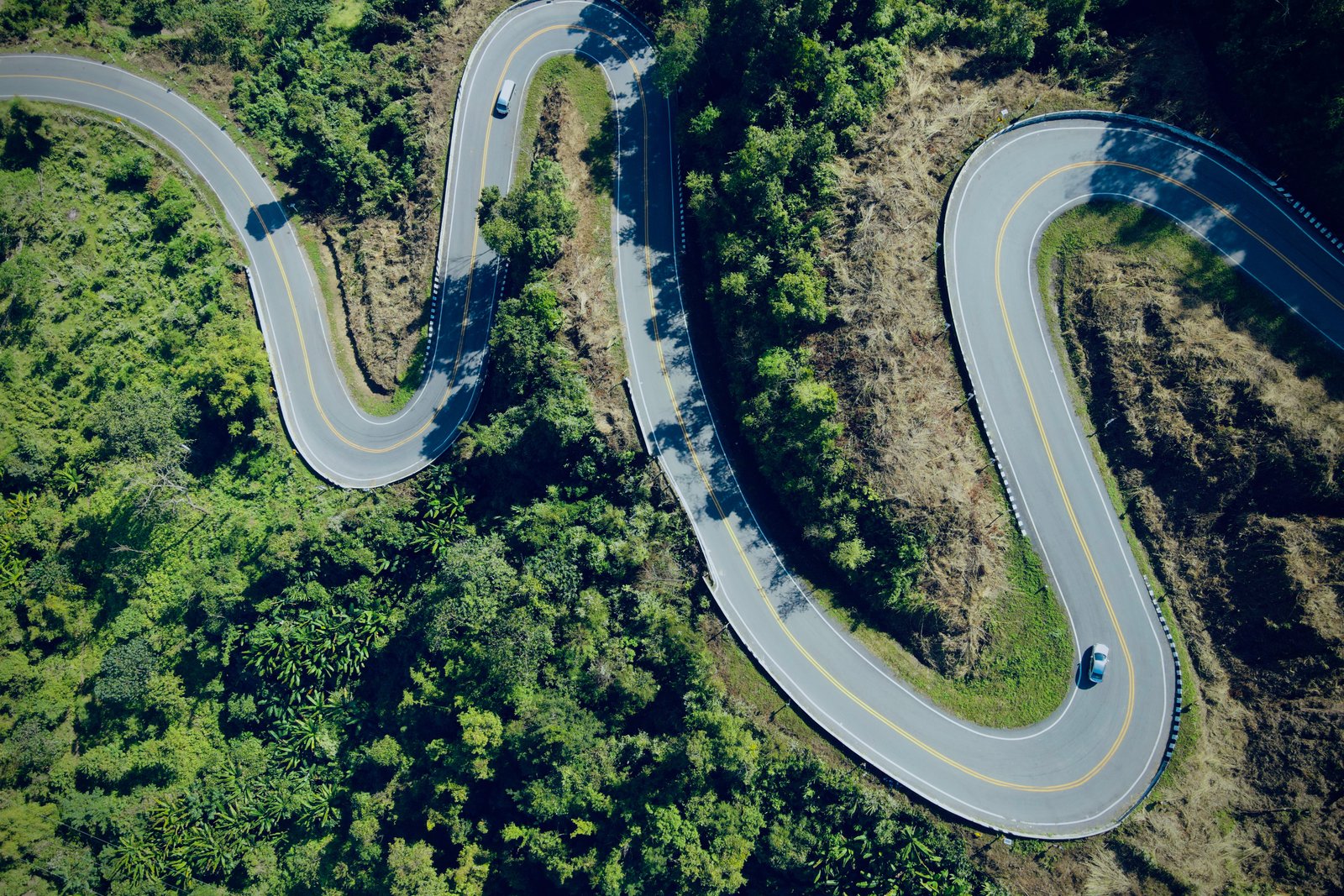
Mountainous, with sharp curves and switchbacks. The roads are properly surfaced but the gradients and cornering are sustained rather than occasional.
Route 1095 between Chiang Mai and Pai is the specific stretch most often discussed. It is commonly cited as having 762 curves over roughly 135 km — a figure repeated on signage and in most accounts of the route, though it reads as a tourist landmark number rather than a survey measurement. What is not in dispute is the character: continuous mountain switchbacks, with limited lighting on the mountain sections.
Phuket
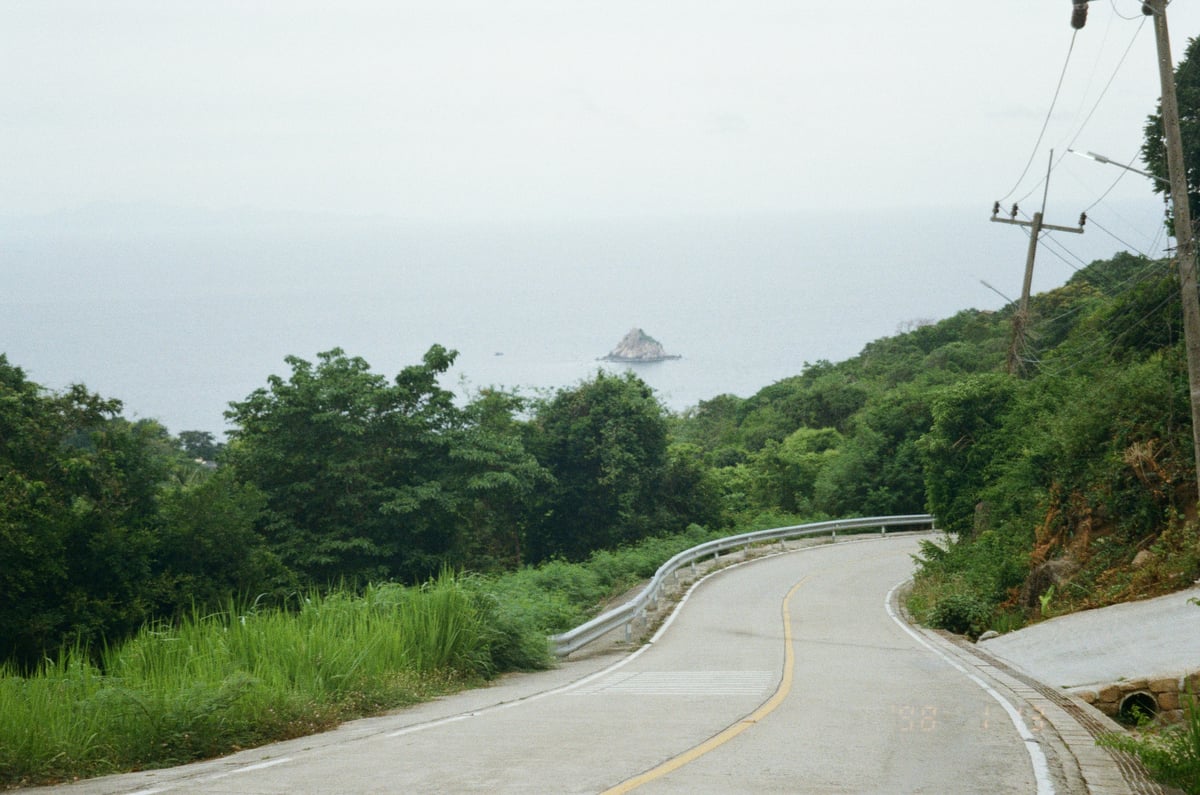
Hilly, with winding coastal and mountain roads connecting the west-coast beaches. Traffic volume is heavier than on the smaller islands, and the island is 48 to 50 km long, so distances between beaches involve real driving rather than short hops. Lighting on the connecting roads is limited.
Koh Samui
The ring road runs about 51 km around the island and is mostly flat coastal driving. The interior behind it is hilly, and the access roads climbing to interior viewpoints and resorts are steeper than the ring itself suggests. Lighting on the ring road is limited outside the built-up stretches.
The smaller southern islands
Mixed. Main roads are generally paved and in reasonable condition, and the surfacing has improved considerably in recent years. What varies is what happens off the main road.
On Koh Tao, one wide paved road connects Sairee, Mae Haad and Chalok Baan Kao, with side roads of similar quality running over to east-coast bays like Hin Wong, Tanote and Sai Daeng. Some dirt tracks remain in more remote areas, and some destinations need four-wheel drive to reach. The terrain between bays is hilly.
Koh Lanta is long and narrow with beaches along the west coast, and Koh Phangan spreads across multiple bays — in both cases the main coastal roads are paved, with the variation sitting in the access roads down to individual beaches.
Bangkok
Flat, dense, and the one place with reliably good street lighting in the urban core. Traffic volume rather than road surface is the governing condition.
Who shares the road
One characteristic that does not appear on a map: in the tourist areas, road users come from many countries with different driving conventions. Rules that are automatic in one place are unfamiliar in another, and the mix is at its most varied on the islands where rental vehicles are most common.
Roads are also shared with pedestrians and animals in the absence of footpaths, which is the practical reason the lighting question matters as much as it does.
What the law requires on these roads
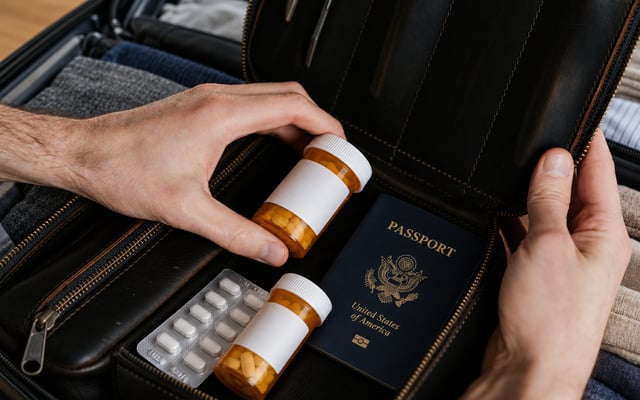
Two rules travel with the conditions above. Helmets are legally required for both rider and passenger, and riding a motorbike legally needs a motorcycle licence from your home country plus an International Driving Permit — both, not either.
Enforcement is the part that misleads. Police checkpoints are common in tourist areas, and being stopped without the right permit or helmet typically means a fine of a few hundred baht, commonly in the region of 400 to 500. Travellers who have been stopped once tend to conclude the whole issue is minor.
The fine is not the risk. Many travel policies exclude a motorbike claim where the rider held no valid motorcycle licence or was not wearing a helmet — and on an unlit road with no footpath, that exclusion meets exactly the conditions this page describes. Our guide to renting a car or scooter sets out the licence chain in full.
How the physical picture fits the rest
Terrain, surfacing, traffic and lighting are inputs rather than answers. What they mean depends on how far you need to travel on any given day, what transport alternatives exist where you are staying, and whether the journeys in question happen in daylight.
How the road conditions combine with distances and transport coverage for a particular itinerary is worked through in the complete Thailand trip guide.
FAQ
Are Thai roads well lit at night?
Outside Bangkok and the main urban areas, generally not. Island roads, mountain roads and rural stretches are largely unlit, and most island roads have no footpaths.
How difficult is the road from Chiang Mai to Pai?
It is continuous mountain driving — commonly cited as 762 curves over roughly 135 km, with sharp switchbacks and limited lighting on the mountain sections. The surface itself is properly made.
What are the roads like on Koh Tao?
One wide paved road connects the three main villages, with side roads of similar quality to the east-coast bays. Some dirt tracks remain in remote areas and some spots require four-wheel drive. The terrain between bays is hilly.
Is Phuket hilly?
Yes — winding coastal and mountain roads connect the west-coast beaches, and at 48 to 50 km long the distances between them involve real driving rather than short hops.
Do Thai island roads have sidewalks?
Mostly not. Walking between bays means sharing the carriageway with traffic, which matters most where lighting is absent after dark.