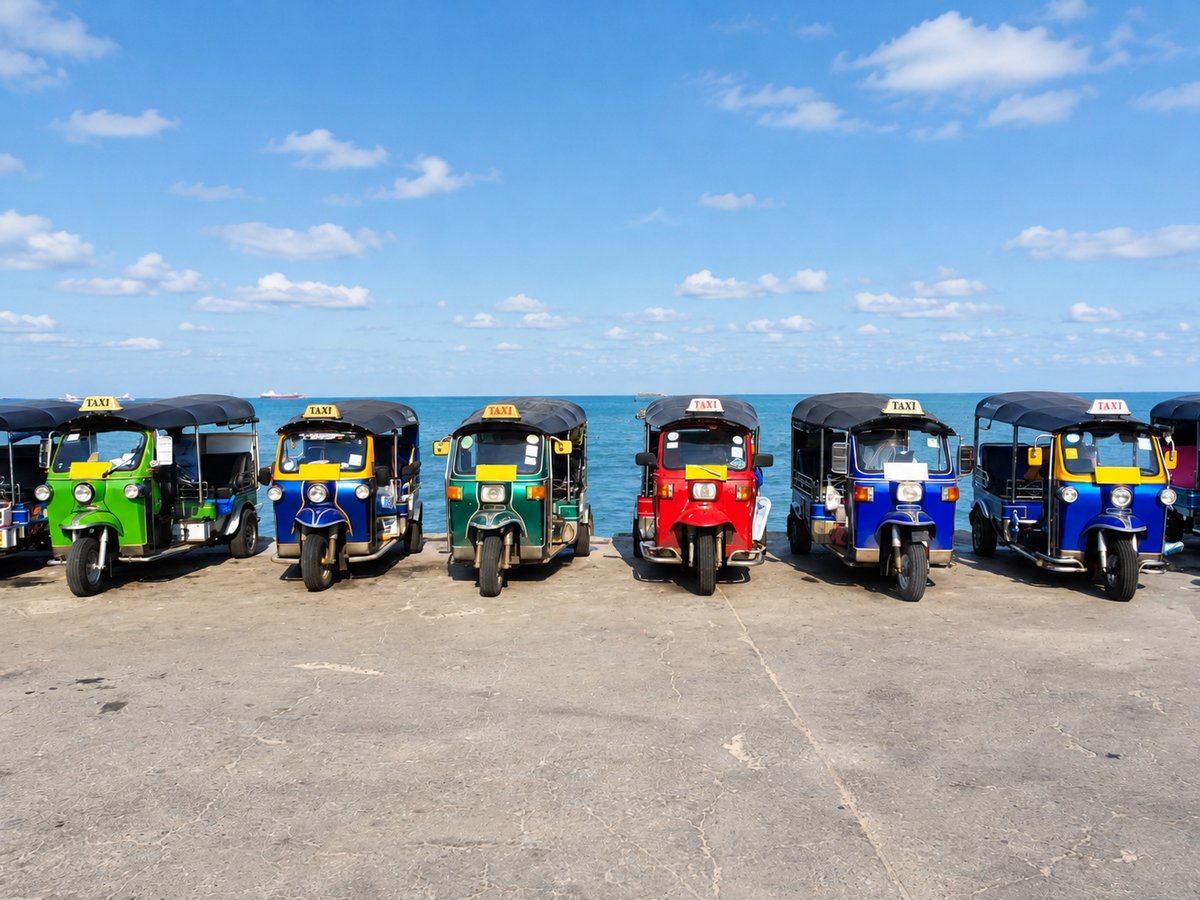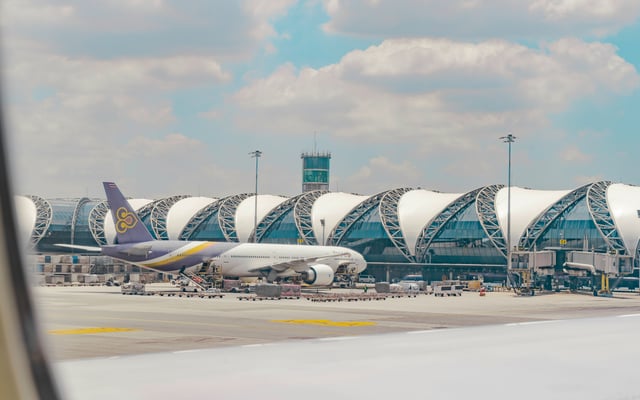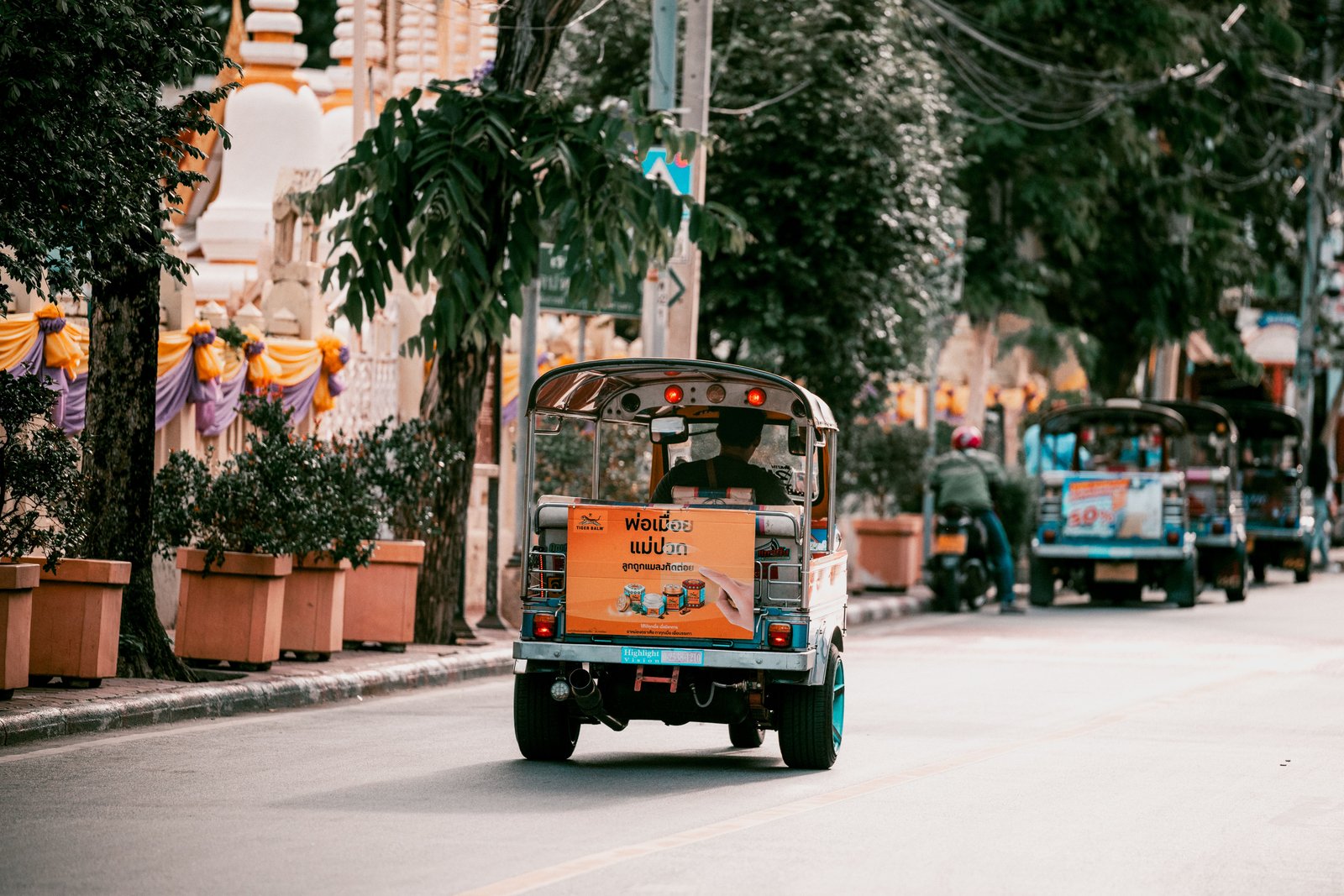
Not everyone wants to ride a scooter, and on some Thai islands you do not need to. What varies enormously is what fills the gap — a frequent shared-truck network on one island, a handful of charter taxis at fixed rates on another. This is what the alternatives actually look like, island by island.
What a songthaew is
A songthaew is a pickup truck with a covered bed and two bench seats facing each other. On most Thai islands it functions as the closest thing to public transport. Where a genuine network operates, you flag one down, ride along a broadly fixed route, and pay a set fare when you get out.
The word covers two quite different things, though, and the difference matters. On some islands songthaews behave like shared buses: they run set routes, pick up whoever is going that way, and charge per person. On others the same vehicle operates as a chartered taxi — a fixed price for the whole truck, negotiated or posted, whether you are one passenger or four.
Island by island
Koh Samui
Songthaews circle the ring road, which runs about 51 km around the island and passes through most of the main beach towns. Routes follow driver preference more than a published timetable, but the network is real and continuous during daylight. Fares run roughly 30 to 150 baht depending on distance — a wide band, because a hop between adjacent beach towns and a run across the island are both served by the same trucks. Service thins out in the evening, whereas Grab, which also operates here, does not keep those hours.
Phuket
Fixed routes run from Phuket Town out to the individual beaches, roughly 6am to 6pm, at about 15 to 50 baht — the cheapest fares of any island here. The shape of that network matters more than the price, though: it radiates from the town rather than connecting the beaches to each other, so a trip between two neighbouring beaches often means going in and back out, while the same distance on Koh Samui's ring road is a single ride. Phuket is around 48 to 50 km long. Grab operates, which is the usual way people cover beach-to-beach.
Krabi and Ao Nang
Ao Nang is on the mainland rather than an island, and it has the most conventional service of any of these places: colour-coded fixed routes with flag-down stops, running every 10 to 20 minutes through the day, at 50 to 60 baht. That frequency is the outlier — elsewhere on this page the honest answer to "when does the next one come" is unknown, whereas here it is a number. Krabi Town to Ao Nang is about 17 to 20 km. Grab operates as well.
Koh Lanta
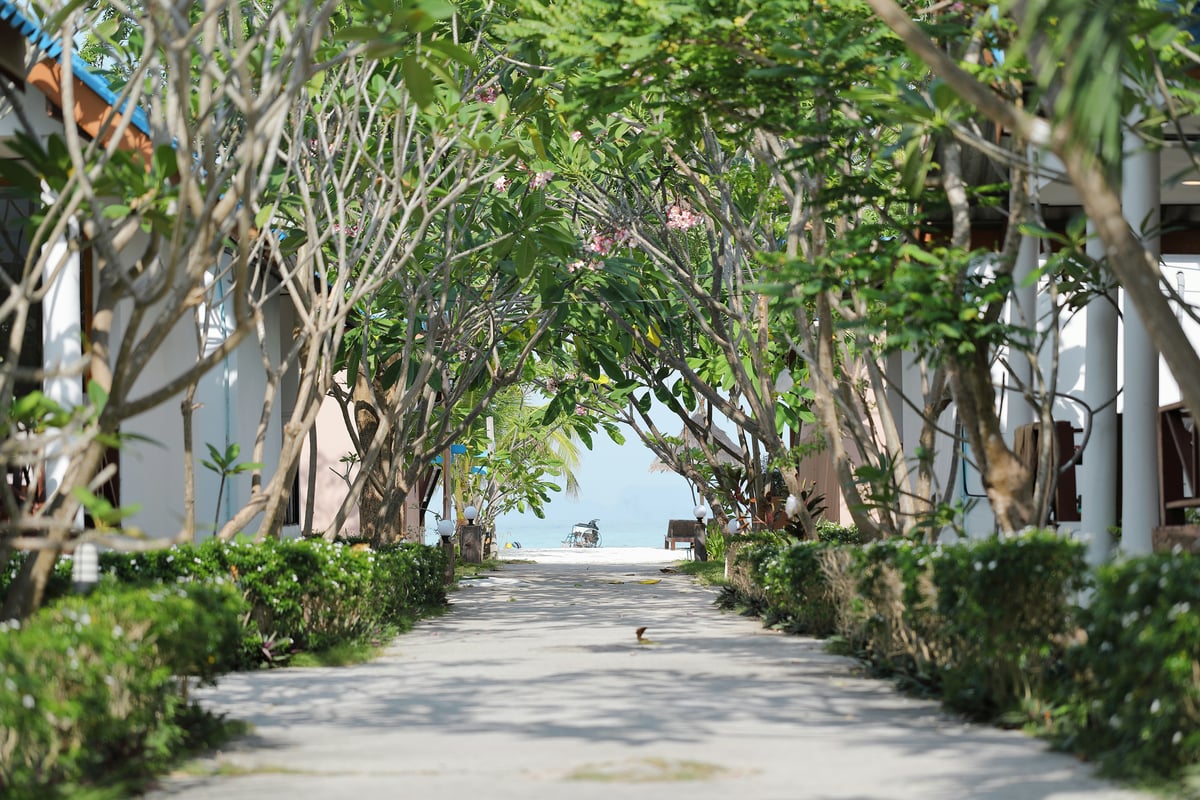
Fixed routes connect the west-coast beaches with Saladan town at the north end, at roughly 50 to 100 baht. The island is long and narrow, around 25 to 30 km, with the beaches strung along one coast. Operating hours are not reliably documented. Grab does not appear to operate.
Koh Phangan
Shared pickup trucks run along the main roads, but fares are frequently negotiated rather than posted, and reported prices vary widely — anywhere from 50 to 500 baht depending on distance and the negotiation. The island is about 16 to 18 km across, with accommodation spread across multiple separate bays. Operating hours are not documented. Grab does not operate.
Koh Chang
Shared trucks run along the west-coast main road and are flagged down; services tend to cluster around ferry arrival times. Fares run roughly 50 to 200 baht. Grab does not operate.
Koh Tao
Koh Tao is the outlier and worth describing carefully. Pickup trucks marked as taxis wait at Mae Haad pier, at the Sairee junction, and near the 7-Eleven in Chalok Baan Kao. They look like songthaews elsewhere. They do not behave like them.
Rates are fixed per route rather than per person: commonly 300 to 500 baht for one or two people from Mae Haad, with about 100 baht added for each additional passenger. Drivers frequently wait to fill the truck before departing, so a solo traveler either pays for the whole vehicle or waits for strangers. The island is small — about 7.5 km long, with the main bays generally under 5 km apart. Set that against Phuket, forty times the length, where the same journey distance costs 15 to 50 baht: the smallest island here has the highest per-trip fares, not the lowest. For two people the per-head cost falls by half; for four it falls again. The fare structure rewards groups and penalises solo travel, which is the reverse of how per-person fares work everywhere else on this page.
Mae Haad and the southern end of Sairee are walkable. The terrain between bays is hilly, and the roads have no footpaths. Grab does not operate.