Renting a car gets far less attention than renting a scooter, and the requirements are meaningfully different. Here is what a car actually involves in Thailand — the paperwork, the cost, the roads it suits, and what the insurance does and does not cover.
What the paperwork requires
Driving a car in Thailand requires a valid home driving licence plus an International Driving Permit issued under the 1949 Geneva Convention. In the United States, AAA and AATA are the only authorised issuers, at around $20, available same-day in person at a AAA branch.
There is a difference here that catches people who have read about scooters. A car requires the ordinary driving licence an American already holds. A motorbike requires a motorcycle endorsement on that licence, which most Americans do not have, and which an IDP does not add. The permit that covers you for a car may not cover you for a scooter — the entitlement comes from the home licence, and the IDP only translates it.
What it costs
Daily rates run roughly 700 to 1,500 baht depending on class, with economy cars at the lower end and SUVs and pickups higher. That sits well above a day of songthaew trips almost anywhere except Koh Tao, where four fixed-rate taxi runs at 300 to 500 baht each would cost more than a car for the day — if a car were practical on an island that size, which it is not. Rates move with season and demand, so treat any figure as a shape rather than a price:
100 USD ≈ … THB (enable JavaScript for today's rate)
What the insurance covers
A standard rental includes compulsory third-party liability, which covers injury or death to other people. It does not cover damage to the rental vehicle itself.
Collision damage waiver and theft protection are separate add-ons, and both carry common exclusions — off-road driving being the usual one. The gap between "insured" as the counter describes it and "insured" as a renter assumes it tends to sit exactly there: third-party injury is covered by default, the car you are driving is not.
Worth reading the specific terms rather than the summary, and worth checking what your own travel insurance says about rental vehicles, since policies differ on whether they duplicate or supplement the rental company's cover.
Where the roads suit a car
Road networks vary enough that the question is less about preference than about physical fit.
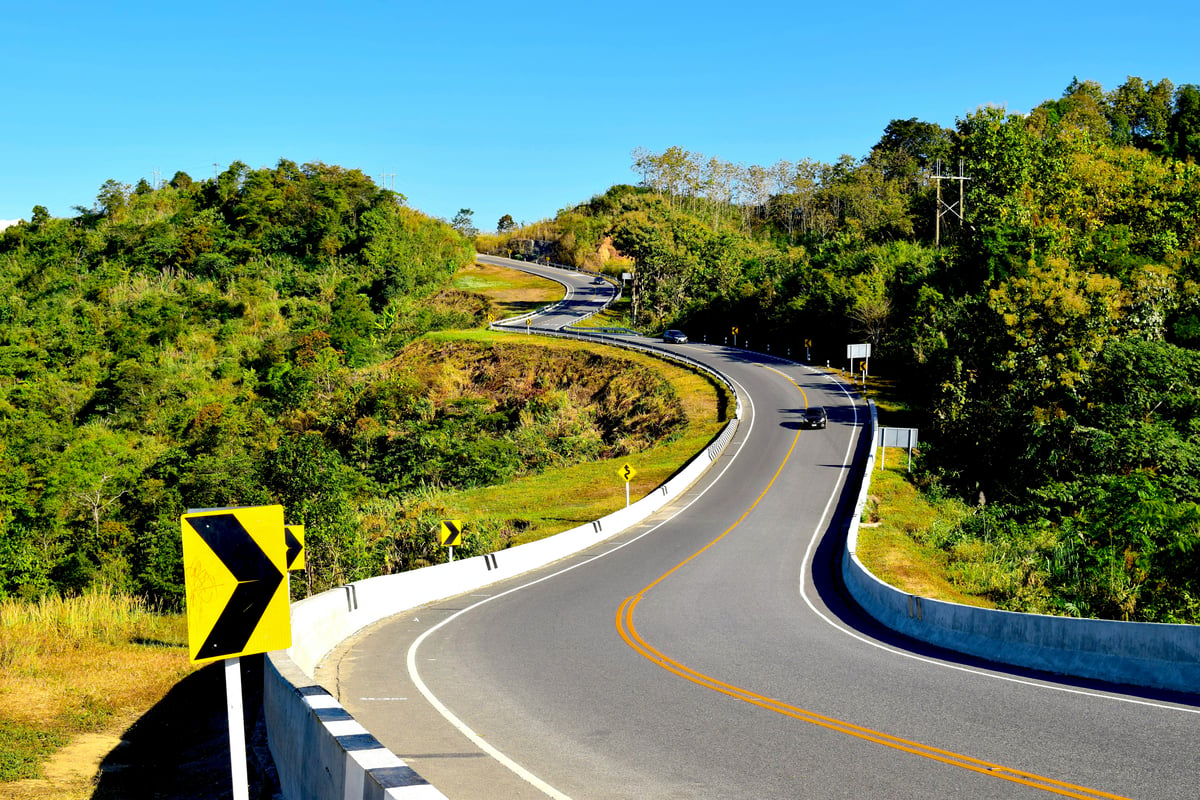
The mainland and the north have the road networks best suited to a car. Chiang Mai and the routes north of it are mountainous with sharp curves and switchbacks — Route 1095 to Pai is commonly cited as having 762 curves over about 135 km — but they are proper roads with room for four wheels.
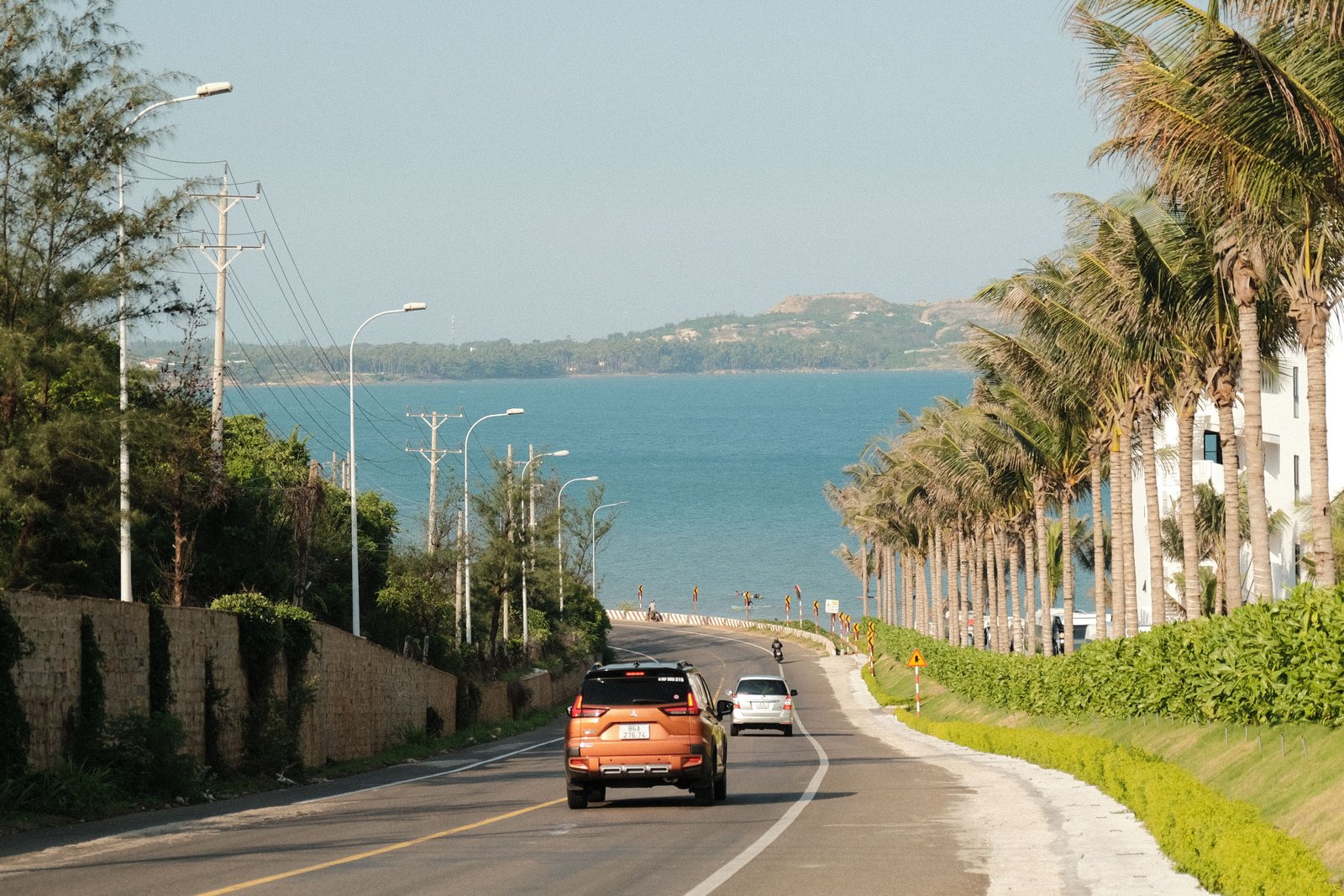
Phuket and Koh Samui both have developed road networks. Samui's ring road runs about 51 km around the island; Phuket is 48 to 50 km long with winding coastal and mountain roads and heavier traffic than the smaller islands.
The smaller islands have narrow roads that do not accommodate cars well. Koh Tao is about 7.5 km long with one main paved road between the villages and side roads over hilly terrain to the east coast bays. Koh Phangan and Koh Lanta are similarly constrained. This is where the paperwork advantage inverts: a car is the easier vehicle to be licensed for and the harder one to actually use, whereas a scooter is the harder one to be licensed for and fits everywhere. The places where the licensing question is most awkward are the places where four wheels are least practical.
Parking
Resorts and shopping centres generally provide parking. The busy beach towns are constrained, and street parking is restricted to legal zones.
Night driving
Street lighting is poor to absent outside Bangkok and the main urban areas. Island and mountain roads are largely unlit after dark, which is the single most consistent road-condition finding across every region. The mountain routes that make a car attractive during the day are the ones with no lighting at night.
How this sits beside the alternatives
A car is one of four ways to cover ground in Thailand, alongside a scooter, the shared-truck networks, and app-based rides where they operate. Each has a different paperwork requirement, a different cost structure, and a different set of places it physically fits.
Which combination suits a particular set of bases and a particular tolerance for driving is worked through in the complete Thailand trip guide.
FAQ
Do I need an International Driving Permit to rent a car in Thailand?
Yes — a valid home licence plus a 1949 Geneva Convention IDP. In the US, AAA and AATA are the only authorised issuers, at around $20, available same day in person.
Is a car easier than a scooter, paperwork-wise?
For most Americans, yes. A car requires the ordinary driving licence you already hold. A motorbike requires a motorcycle endorsement that most US licences lack, and an IDP does not add one.
What does rental car insurance in Thailand cover?
Standard rentals include compulsory third-party liability, covering injury to other people. Damage to the rental vehicle itself is not included — collision damage waiver and theft protection are separate add-ons with common exclusions.
How much does a rental car cost in Thailand?
Roughly 700 to 1,500 baht per day depending on class, though rates move with season and demand.
Where in Thailand do the roads suit a rental car?
The mainland, the north, Phuket and Koh Samui have developed road networks. The smaller islands — Koh Tao, Koh Phangan, Koh Lanta — have narrow roads that accommodate cars poorly.